⚡ Array Multiplier
Understanding Digital Multiplication Through Array Logic
📘 Introduction
An Array Multiplier is a combinational digital circuit that performs binary multiplication using a systematic arrangement of logic gates. It multiplies two binary numbers by implementing the traditional multiplication algorithm in hardware, using a grid of AND gates and adders arranged in a regular pattern.
🔍 2-bit by 2-bit Array Multiplier
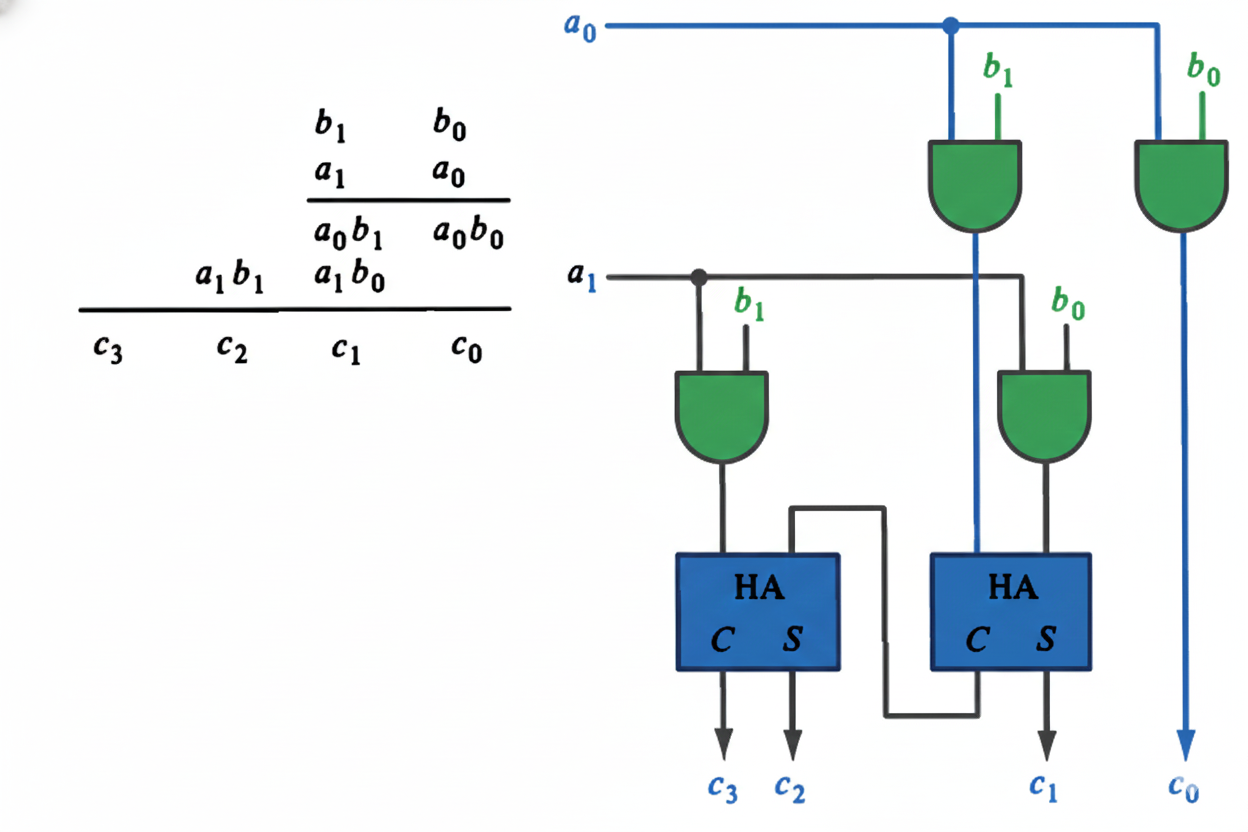
Figure 1: Architecture of a 2-bit by 2-bit Array Multiplier
How It Works:
For two 2-bit numbers a = a₁a₀ and b = b₁b₀, the multiplication produces a 4-bit result c = c₃c₂c₁c₀.
- Step 1: Generate partial products using AND gates (a₀b₀, a₀b₁, a₁b₀, a₁b₁)
- Step 2: Align partial products according to bit position
- Step 3: Use Half Adders (HA) to sum the aligned partial products
- Step 4: Propagate carries to produce final 4-bit result
🔬 4-bit by 3-bit Array Multiplier
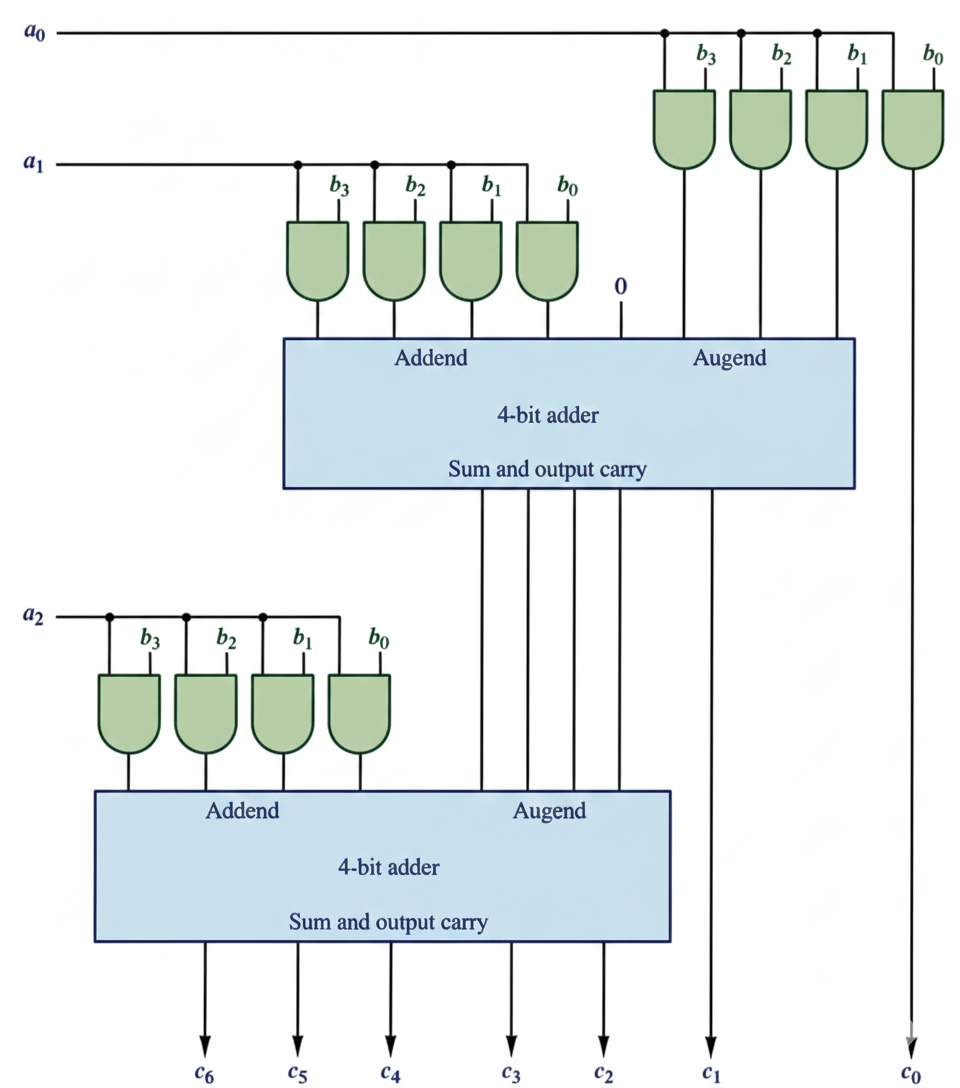
Figure 2: 4-bit by 3-bit Array Multiplier showing adder network architecture
The 4-bit array multiplier extends the concept by using multiple rows of AND gates and a network of full adders arranged in a systematic array structure.
⚙️ Key Components
Generate partial products by ANDing each bit of one multiplicand with each bit of the other
Sum two bits producing sum and carry outputs (used in first row)
Sum three bits including carry-in from previous stage (used in subsequent rows)
Propagates carries through the adder network to generate final result
📊 Performance Analysis
| Parameter | n-bit Array Multiplier | Notes |
|---|---|---|
| Delay | O(n) | Linear with bit width due to carry propagation |
| Area | O(n²) | Requires n² AND gates and approximately n² adders |
| Power | Medium | All gates active simultaneously |
| Regularity | High | Regular structure simplifies layout and design |
🧮 Interactive Binary Multiplier
Try multiplying two 4-bit binary numbers!
✨ Advantages & Disadvantages
Advantages:
- Parallel Operation: All partial products generated simultaneously
- Regular Structure: Easy to layout and manufacture in VLSI
- Predictable Timing: Constant delay regardless of input values
- Modular Design: Easy to scale to larger bit widths
- Simple Control: No complex control logic required
Disadvantages:
- Area Intensive: Requires n² gates for n-bit multiplication
- Power Consumption: All gates switching simultaneously
- Speed Limitation: Carry propagation creates critical path
- Not Optimal for Large Numbers: Better algorithms exist for larger multiplications
🎯 Applications
- Digital Signal Processing (DSP): Fast multiplication in filters and transforms
- Graphics Processing: Matrix operations and coordinate transformations
- Arithmetic Logic Units (ALUs): Core multiplication operations in processors
- Cryptography: Modular arithmetic operations
- Scientific Computing: Floating-point multiplication units
- Image Processing: Convolution and filtering operations