BSA: Branch and Save Return Address
Understanding Memory Reference Instructions
📋 Overview
The BSA (Branch and Save Return Address) instruction is a fundamental operation in computer architecture used for subroutine calling. It enables branching to a subroutine while preserving the return address for later continuation.
This instruction, expressed in register transfer notation, demonstrates how the return address is saved before jumping to the subroutine.
🎯 Instruction Tabs
Execution Process
BSA cannot be executed in one clock cycle due to bus system limitations. It requires a sequence of two microoperations with appropriate timing signals.
Numerical Example: BSA at Address 20
Consider the instruction BSA 135 located at address 20:
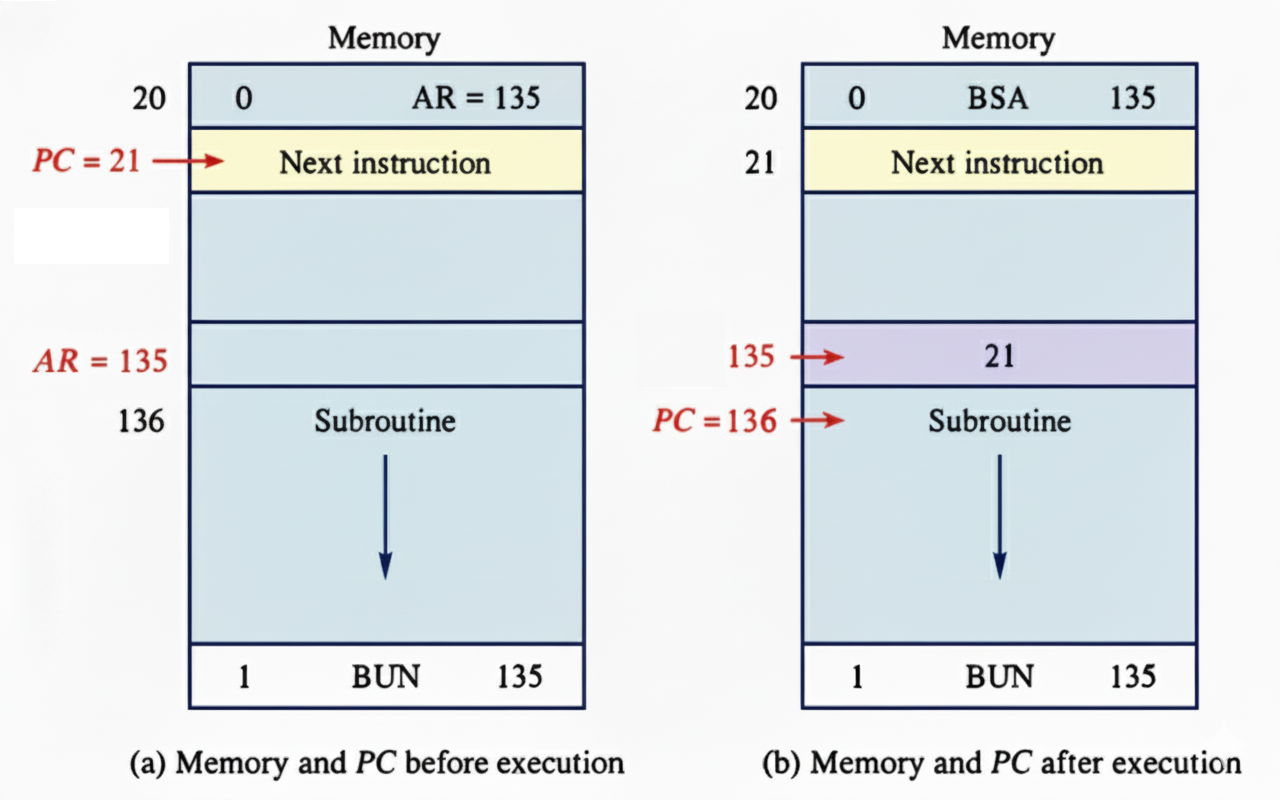
The return address (21) is stored at the subroutine entry point (135), and the PC is set to 136 (AR + 1) to begin execution of the subroutine body.
Timing Sequence
The BSA instruction requires two microoperations:
- T₄: Initiates memory write, places PC content onto bus, enables INR input of AR
- T₅: Completes memory write, transfers AR to PC by next clock transition
Memory Reference Instructions Flowchart
Control sequence for memory reference instructions including BSA:
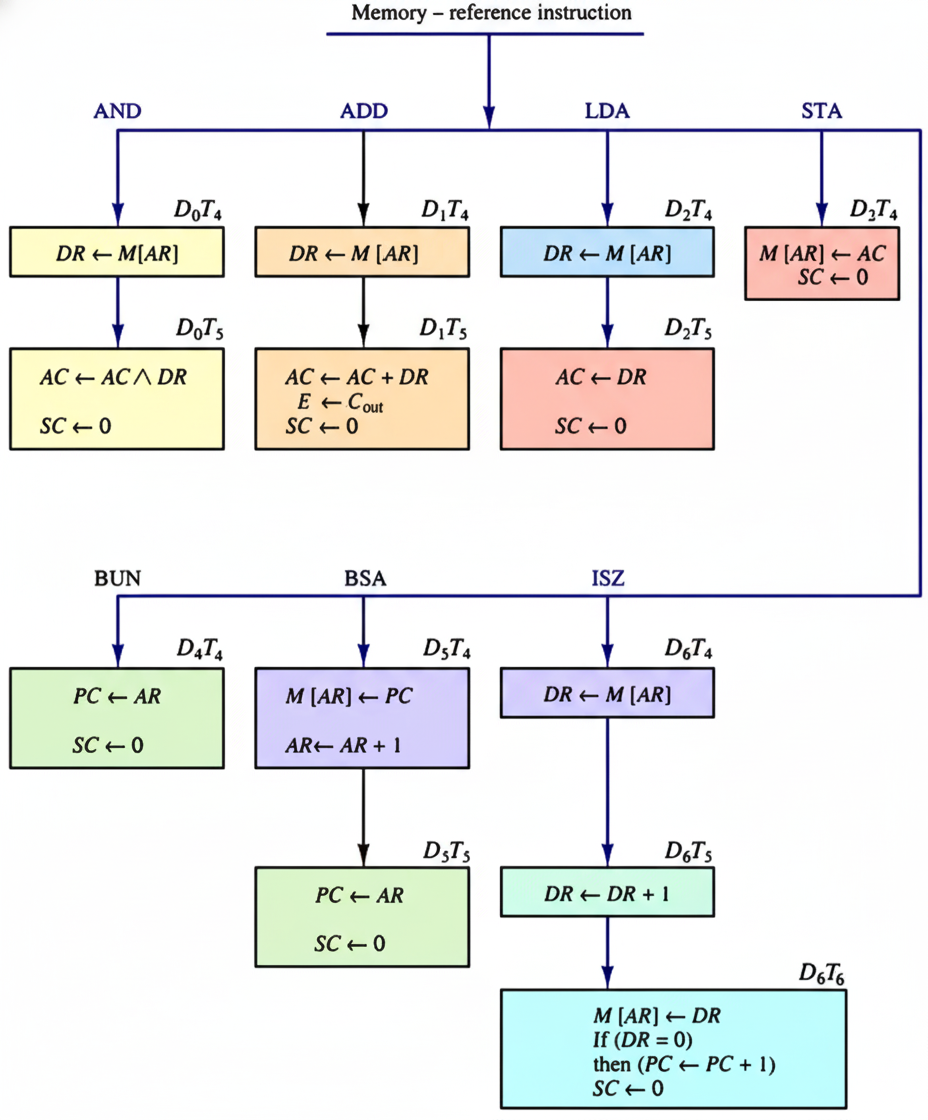
The BUN instruction at the end of the subroutine performs an indirect jump: PC ← M[AR], which retrieves the saved return address and continues execution at the original calling point.
🎮 Interactive Demo
Simulate BSA instruction execution:
🔍 Other Memory Reference Instructions
if (M[AR] = 0)
then PC ← PC + 1