The Assembler
Experience the magic of translating symbolic code into machine language through an interactive two-pass process
What is an Assembler?
An assembler is a crucial program that bridges the gap between human-readable assembly language and machine-executable binary code. It transforms symbolic representations into precise binary instructions that computer hardware can understand and execute.
📝 Source Program
Symbolic assembly code written by programmer
⚙️ Assembler
Two-pass translation process
🎯 Object Program
Binary machine language code
Memory Representation
Before assembly begins, the symbolic program must be loaded into memory using specific encoding rules:
The Two-Pass Assembly Process
The assembler uses a sophisticated two-pass approach to ensure accurate translation of symbolic code:
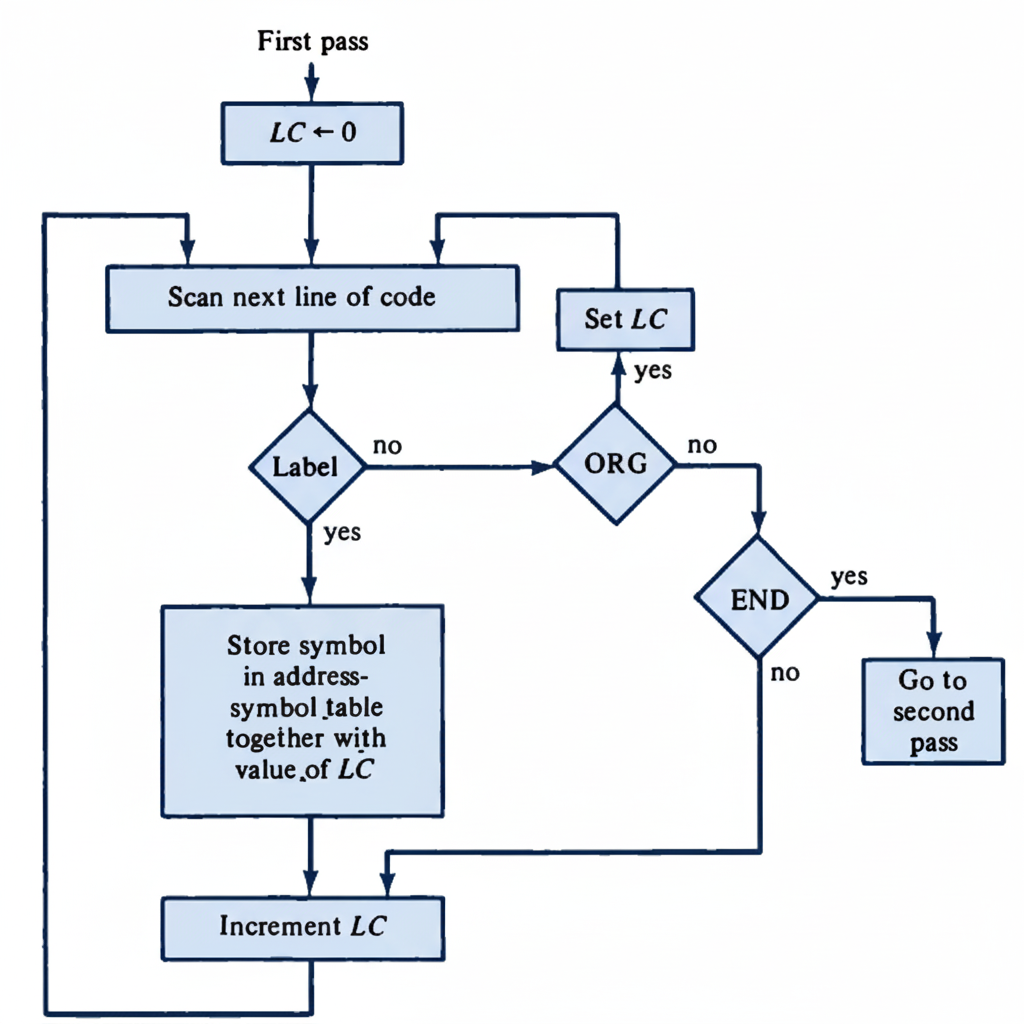
First Pass: Symbol Resolution
- 🎯 Initialize Location Counter (LC) to 0
- 🔍 Scan for Labels in each line
- 📊 Build Symbol Table with addresses
- ➕ Increment LC for each instruction
- 🏁 Stop at END pseudoinstruction
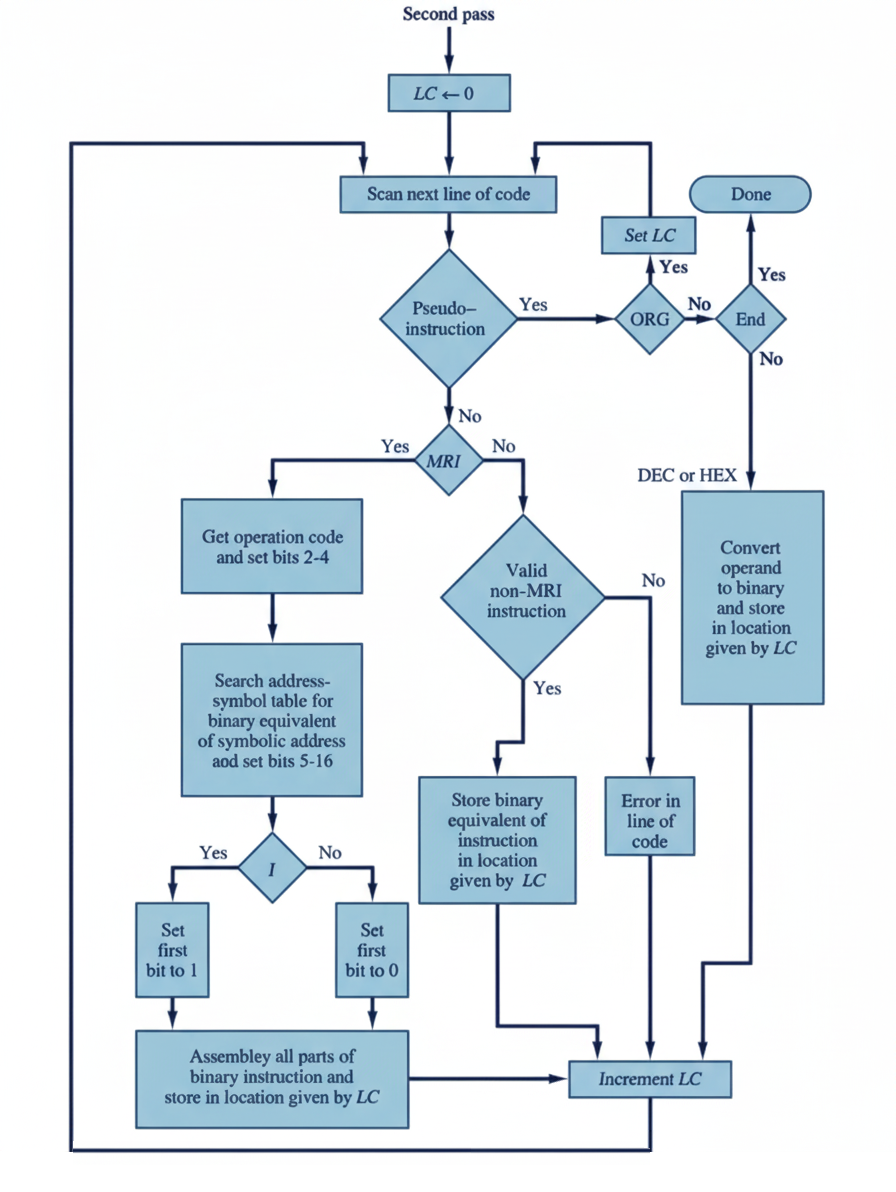
Second Pass: Code Generation
- 🔄 Reset LC to 0
- 📋 Use Lookup Tables for translation
- 🔢 Convert Instructions to binary
- 🎯 Resolve Addresses from symbol table
- 💾 Generate Object Code
Flowchart for Assembler
First Pass: Flow Chart
Second Pass: Flow Chart
Interactive Assembly Demonstration
Lookup Tables Used by Assembler
The assembler uses four essential tables during the second pass for accurate code translation:
📋 Pseudoinstruction Table
🎯 MRI Table
BUN(4), BSA(5), ISZ(6)
⚙️ Non-MRI Table
INC, SPA, SNA, SZA, SZE, HLT
🏷️ Address Symbol Table
Generated in First Pass
Error Detection & Diagnostics
A robust assembler identifies and reports various types of errors to help programmers debug their code:
LDA UNKNOWN / Symbol 'UNKNOWN' not defined in program
INVALID 100 / 'INVALID' is not a valid instruction
123ABC, / Symbol cannot start with a number